
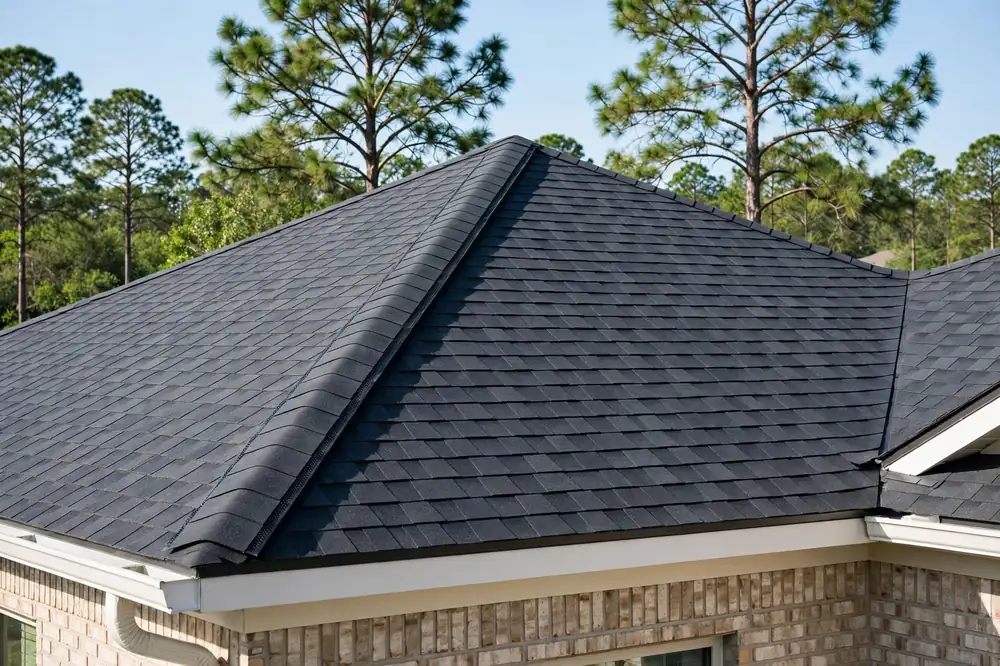
Heat, humidity, and condensation — the attic is where roofs age
Attic Ventilation in Conroe, TX: Ridge, Soffit & Balance
A Conroe attic is where a roof ages. Summer sun drives dark-shingle surfaces past 160°F by report, and the attic holds that heat long after dark — homeowners report upstairs rooms still hot at midnight. Winter is the other half: a 70°F afternoon followed by a sub-freezing night drives condensation into an attic whose ventilation and insulation are off, leaving damp sheathing, rusted nail points, and a musty smell. We balance ridge exhaust with soffit intake, keep the intake clear of insulation, and fix the ventilation faults that curl shingles and rot decks — see why shingles curl and crack in Texas heat.
Ridge exhaust & soffit intakeHeat, humidity & condensationMon–Sat 8 AM–8 PM
What's included
What Our Attic Ventilation Covers
Ventilation is a system — exhaust, intake, and the balance between them. Here is what is included.
Ridge Vent
An externally baffled ridge vent along the ridge, so hot air leaves at the top. The vent is only as good as the intake below it — exhaust without intake is a vent that does not move air.
Soffit Intake
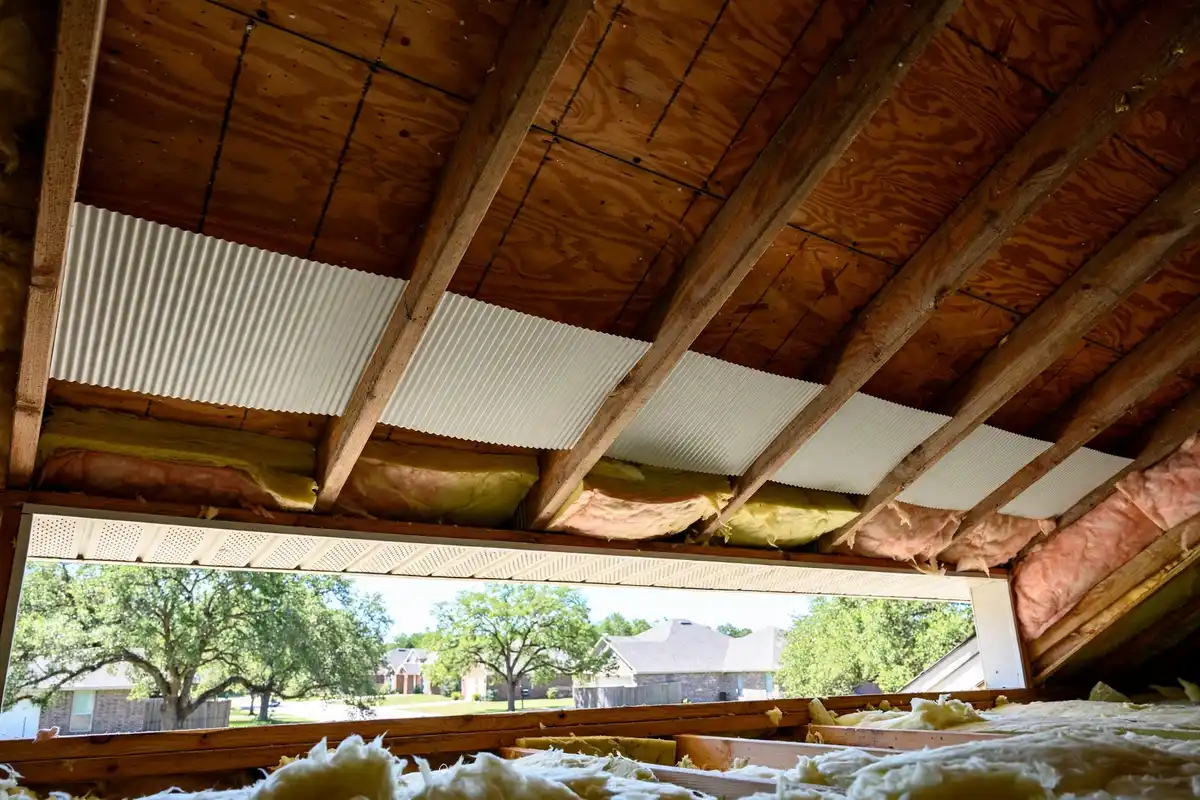
Intake vents at the eaves, kept clear of insulation with baffles, so cool air can enter low and push hot air out at the ridge. Blocked soffits are the most common ventilation fault we find.
Exhaust and Intake Balance
The two sides are balanced, so the attic breathes instead of pulling conditioned air out of the house or pulling moist air in. The International Residential Code (§R806) sets a general 1:300 net-free-vent-area ratio as the starting point.
Solar Attic Fans
A solar-powered fan where the roof and the exposure call for powered exhaust — an option, not a default, and only where the intake can feed it.
Radiant Barrier
A radiant barrier under the deck where it helps, reflecting heat before it reaches the attic. It is an adjunct to ventilation, not a substitute for it.
Bathroom Fan Venting
Bathroom fans vented to the outside, not into the attic. A fan venting into the attic pumps warm, moist air straight onto the sheathing.
Service overview
What Attic Ventilation in Conroe Really Involves
Attic ventilation in Conroe is the balancing of ridge exhaust with soffit intake, so air enters low at the eaves and leaves high at the ridge, carrying heat and moisture out with it. The ridge vent is externally baffled, the soffit intake is kept clear of insulation with baffles at the eaves, and the two sides are balanced — because exhaust without intake is a vent that does not move air, and intake without exhaust is a vent that does not move it either. The International Residential Code (§R806) sets a general 1:300 net-free-vent-area ratio as the starting point; the roof, the exposure, and the attic decide the rest.
The case for ventilation here is the strongest informational case on the site, because the symptoms are the ones homeowners actually feel. Summer: dark-shingle surfaces reported above 160°F, attics holding heat, and shingle edges curling and cupping — a sign of heat stress or a ventilation shortfall. Winter: a 70°F afternoon followed by a sub-freezing night drives condensation in the attic when ventilation and insulation are off, leaving damp sheathing, rusted nail points, and a musty smell. And it is not just old roofs: newer homes in Grand Central Park have turned up with decorative, non-functional ridge vents and missing kick-out flashing — ventilation is a genuine inspection finding on 2018-and-newer builds, not just on old ones. In established neighbourhoods such as Panorama Village and Teaswood, the call is more often an attic that has never been balanced at all.
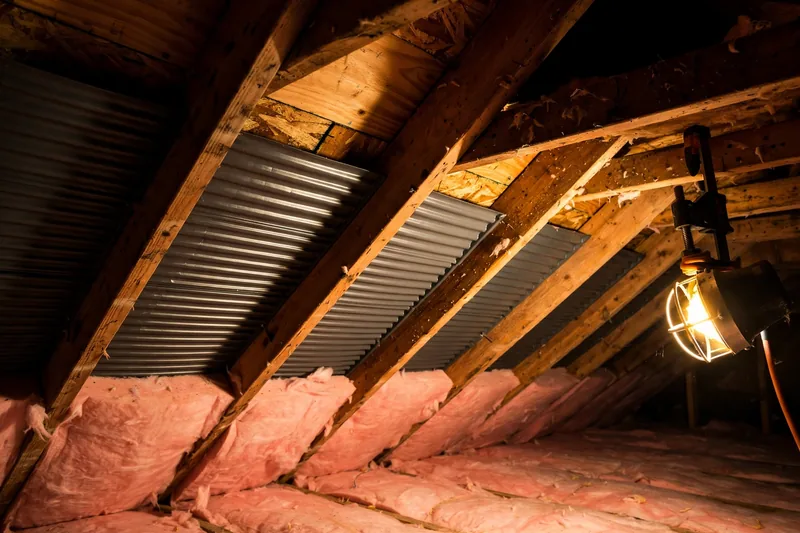
How we workWe verify the cause, compare realistic options, and confirm the scope before work starts.
The service timeline
How Our Attic Ventilation Process Runs
Diagnose the symptom, then balance the system.
Inspection
We check the attic: the ridge vent, the soffit intake, the baffles at the eaves, the insulation coverage, and the bathroom fan venting — and the sheathing, for the damp and the rust that say condensation has been at work.
Written Scope
The ventilation work is priced line by line — ridge, intake, baffles, fan, or barrier — with the balance explained, not just the parts.
Clear the Intake
Soffit intake blocked by insulation is cleared and baffled, so air can enter low. It is the most common fault we find, and the cheapest to fix.
Balance the System
Ridge exhaust and soffit intake are balanced, so the attic breathes. A solar fan or a radiant barrier is added only where the roof and the exposure call for it.
Check and Walk-Through
We check the airflow, photograph the work, and walk you through what changed — and what to watch for, in summer heat and in winter condensation.
Tools methods
Tools and Methods We Use on Ventilation
Diagnosis first — a vent is only a fix if the diagnosis is right.
Moisture meter
Finds damp sheathing and traces condensation to its source in the attic.
Thermometer
Reads attic temperatures against the outside air, so the heat problem is measured rather than guessed.
Inspection light and camera
Photographs the ridge vent, the soffit intake, the baffles, and the sheathing — the record the scope is written from.
Tin snips and metal brake
Cuts and forms ridge vent and intake vent sections to fit the roof.
Staple gun and baffles
Fits baffles at the eaves so insulation stays out of the soffit intake.
Roof safety harness and ladder stabilizer
Fall protection and stable ladder access on every job, on every pitch.
Use cases
When Conroe Homeowners Call Us for Attic Ventilation
These examples show how the service framework adapts rather than forcing every call through one repair.
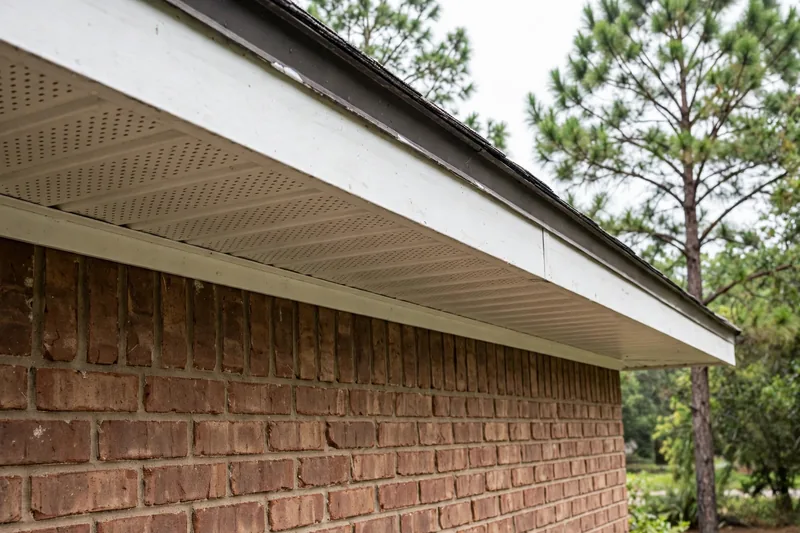
Condensation in Panorama Village
A musty smell in the attic every winter, with damp sheathing and rusted nail points. The scope starts with the attic — ventilation balance and a bathroom fan venting into the attic — because condensation is a ventilation problem before it is a roof problem.
Curling Shingles in Teaswood
Shingle edges curling and cupping on a shaded lot, where the slope never fully dries. The scope is a ventilation check alongside the roof — ridge and intake — so the new shingles are not fighting the attic from day one. See roof replacement.
Problems we solve
Attic Ventilation Problems We Solve for Conroe Homeowners
Most of the ventilation calls we get in Conroe trace back to one of these problems.
Upstairs rooms hot long after dark
An attic holding summer heat pushes it down into the rooms below. Ridge exhaust balanced with soffit intake moves the heat out instead of storing it.
Curling and cupping shingles
Shingle edges curling and cupping signal heat stress or a ventilation shortfall. The scope is a ventilation check alongside the roof — not just new shingles on the same hot attic.
Damp sheathing and a musty attic
Winter condensation leaves damp sheathing, rusted nail points, and a musty smell. The fix is balance — air in low, air out high — and a bathroom fan that vents outside, not into the attic.
A ridge vent that does not move air
Decorative, non-functional ridge vents have turned up on newer builds. We check that the vent is a working vent, and that the soffit intake below it is clear.
How an estimate works
How Your Attic Ventilation Estimate Is Put Together
We do not publish prices — the roof, the attic, and the fault all move the figure. Here is what shapes the estimate.
The diagnosis
A hot upstairs, condensation, or curling shingles can each have more than one cause. The inspection decides whether the fix is a vent, a baffle, or a fan — and the scope is written from the diagnosis.
Ridge and intake
The vent work itself: ridge exhaust, soffit intake, and baffles at the eaves. The balance is the scope, not just the parts.
The adjuncts
A solar fan or a radiant barrier where the roof and the exposure call for it. Both are options, priced as choices — neither is a substitute for balanced ventilation.
Customer reviews
What Conroe Homeowners Say
★★★★★
Mr. Britt Cartwright and his crew made the investment worthwhile indeed specially knowing that they also have the needed experience working with the solar panel company to get the panels re-installed right the first time!
★★★★★
We were referred to Britt from someone else in our neighborhood. I cannot say enough good things about this company. They delivered an amazing roof and made sure we were happy every step of the way.
★★★★★
Just got a new roof with Squared Up Roofing on June 29, 2024 and I am very pleased! Mr. Britt and his team showed up and showed out. Mr. Britt operates with great Integrity and is a great person as well.
★★★★★
What can you say about a company that actually does what they promise!! Well Squared Up truly is that company. I was pretty nervous about replacing my roof but Britt walked me through the entire process and was there for me every step of the way.
How much ventilation does my roof need?
The International Residential Code (§R806) sets a general 1:300 net-free-vent-area ratio as the starting point — one square foot of net free vent area for every 300 square feet of attic floor — confirm the ratio is unamended in Conroe's adopted code edition for your job. The roof, the exposure, and the attic decide the rest, and the balance between ridge exhaust and soffit intake matters as much as the total.
Why is my upstairs so hot in summer?
Because the attic is holding heat. Dark-shingle surfaces are reported above 160°F in a Conroe summer, and an attic without balanced ventilation stores that heat and pushes it down into the rooms below long after dark. Ridge exhaust balanced with soffit intake moves the heat out.
Why is there condensation in my attic in winter?
Because a 70°F afternoon followed by a sub-freezing night drives moisture out of the warm air and onto the cold sheathing — especially where ventilation is off, or a bathroom fan is venting into the attic instead of outside. Damp sheathing, rusted nail points, and a musty smell are the signs.
Ridge vent or attic fan — which is better?
They do different jobs. A ridge vent is passive — air enters low at the soffit and leaves high at the ridge, all day, with no moving parts. A fan is powered exhaust, and it only helps where the intake can feed it. The right answer is usually the balanced passive system first, with a fan as an option where the roof and the exposure call for it.
Related services
Other Roofing Services We Handle in Conroe
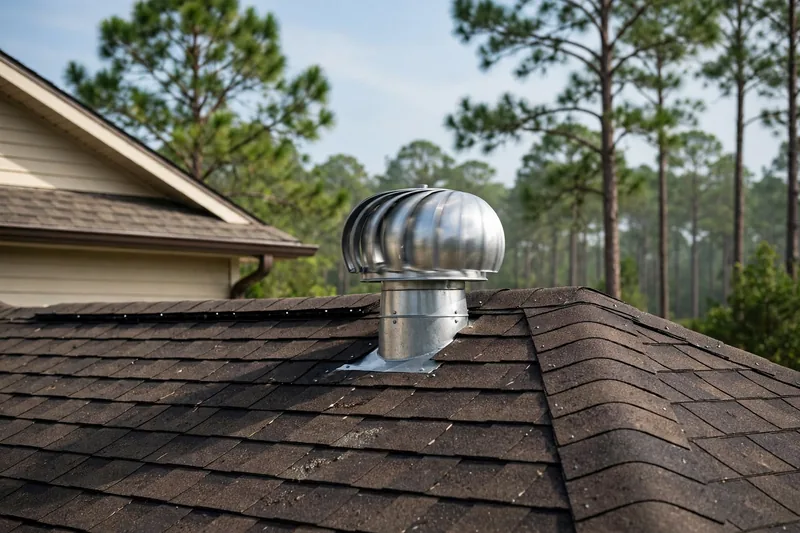
Roof Inspection
The attic check is part of every inspection — ridge vent, soffit intake, baffles, and the sheathing, with photos of what we found.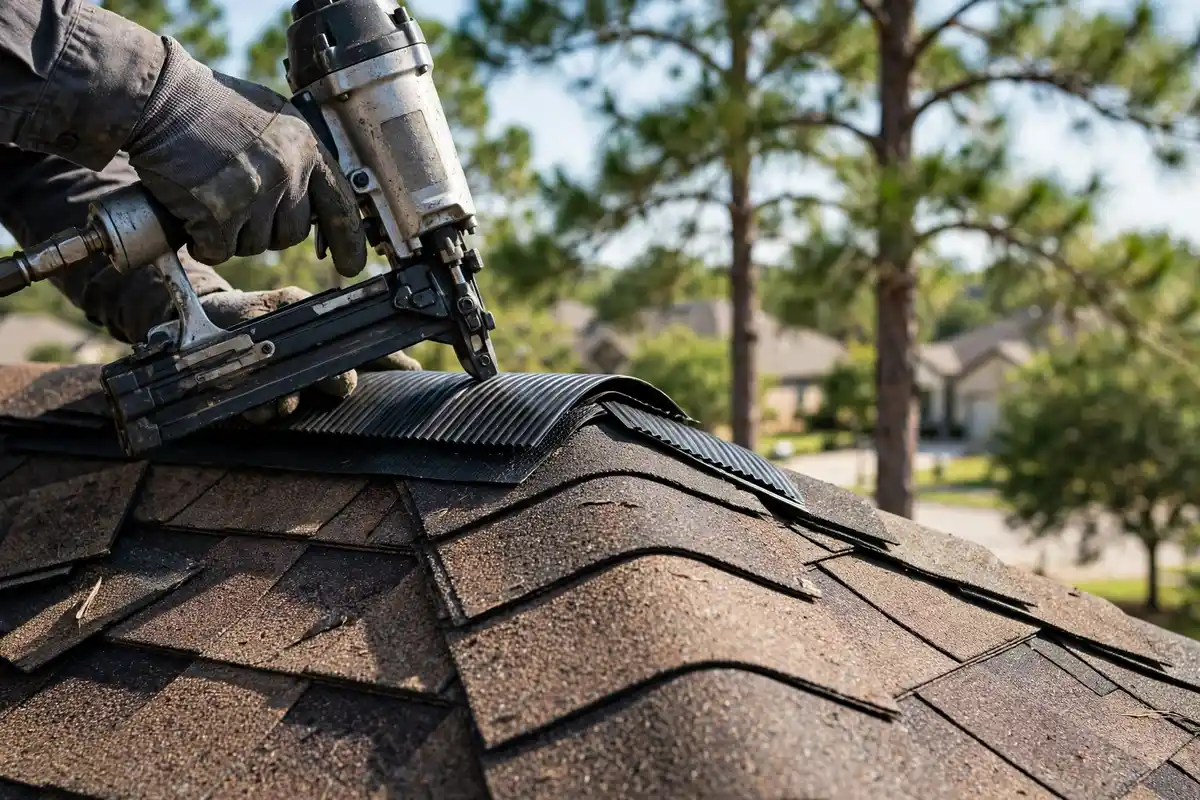
Roof Replacement
Ventilation is specified on every reroof. A new roof on an unbalanced attic is a new roof fighting the attic from day one.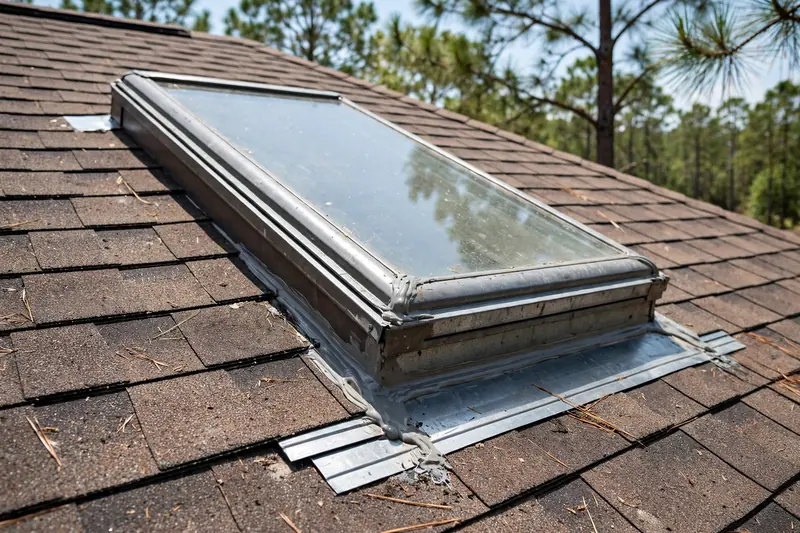
Skylight Repair
Condensation on a skylight is often an attic problem. We check the ventilation before blaming the unit.Ready when you are
Get Your Attic Ventilation Checked in Conroe
One inspection, a written scope, and a straight answer on what your attic needs. Call (936) 693-8377, Monday to Saturday, 8 AM to 8 PM.
Talk with the local team
Request Attic Ventilation
Call (936) 693-8377 to book a roof inspection or talk through attic ventilation. We answer during business hours, Monday to Saturday, 8 AM to 8 PM, and return after-hours calls the next business morning.